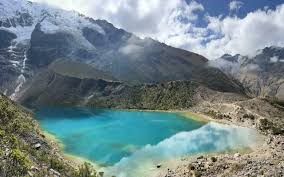
Flora and fauna at Humantay Lake (4,200m): Puya Raimondi, queñua trees, Andean condor, vicuñas, vizcachas. Wildlife guide.
Humantay Lake sits at 4,200 masl in a unique high-Andean ecosystem. Despite the extreme altitude, the area hosts a surprising diversity of plant and animal life adapted to cold temperatures and thin air.
Vegetation coverage (MINAM 2015)
| Type | Coverage | Description |
|---|---|---|
| Grasslands (Pajonales) | 35.5% | Vast fields of ichu grass |
| Andean forest | 20% | Queñua and other native trees |
| Shrublands | 12.6% | Low bushes and shrubs |
| Wildflowers | Variable | Orchids, bromeliads, seasonal blooms |
Flora
Puya Raimondi
The giant of the Andes, reaching up to 15 meters tall. One of the rarest plants in the world, it blooms only once in its 80-100 year lifespan.
Ichu (Stipa ichu)
Tall, resistant grass dominating the highland landscape. Used by local communities for roofing and Inca bridge construction.
Queñua
Native Andean tree growing at the highest altitudes of any tree in the world. Its bark has medicinal properties.
Wildflowers
Orchids, bromeliads, and colorful wildflowers bloom especially during the rainy season (November-March).
Fauna
Birds
- Andean Condor — The king of the Andes with a 3.3m wingspan. One of the most sacred animals for the Incas.
- Andean Hawk — Frequently spotted soaring above the lake
- Andean Hummingbird — Tiny but resilient at extreme altitude
- Andean Partridge — Ground-dwelling bird common in grasslands
Mammals
- Vicuñas — Wild relative of the llama, producing the finest fiber in the world
- Alpacas and Llamas — Domesticated camelids grazing near the trail
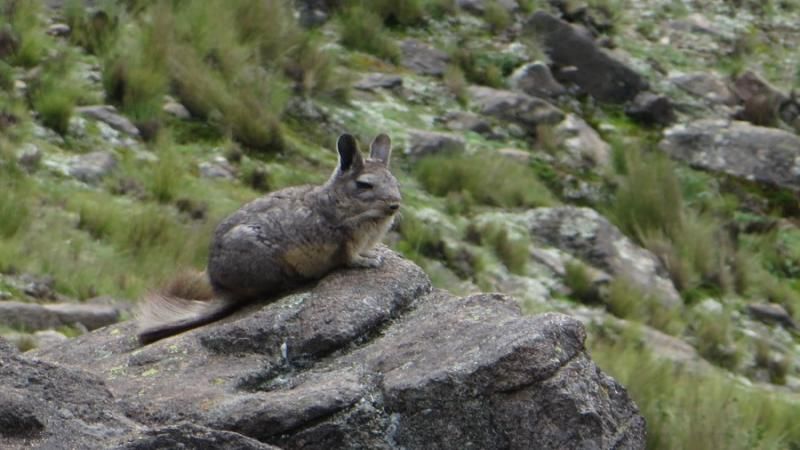
- Vizcacha — Andean rodent resembling a rabbit, often spotted on rocks
- Andean Fox — Elusive but sometimes visible in early morning
Other wildlife
- Amphibians — Frogs and toads adapted to cold temperatures
- Trout — Introduced species found in nearby streams
Best time for wildlife spotting
The dry season (May-September) offers clearer skies and more animal activity. Early morning departures increase chances of spotting condors and foxes.
Visit on our Humantay Lake Tour from $35 USD. Check our weather guide and route map.
At 4,200 meters, life finds a way. The ecosystem of Humantay Lake is a testament to nature's resilience in one of the harshest environments on Earth.