Discover the Qhapaq Ñan: 23,000 km of Inca roads, hanging bridges of ichu fiber, the Q'eswachaka bridge, floating bridges of Lake Titicaca, and the hidden bridge at Machu Picchu.
The Qhapaq Ñan, or Inca road system, extended over 23,000 kilometers, connecting vast regions of the Tahuantinsuyo from southern Colombia to central Chile. These roads traversed mountains, canyons, forests, and snowfields, demonstrating extraordinary engineering capability. To overcome natural obstacles, the Incas built various types of bridges that continue to amaze the world today.
Inca bridges and roads: connecting the empire
Inca bridges played a fundamental role in the development of the Tahuantinsuyo. An estimated 200 bridges were distributed throughout the road network, facilitating rapid transit of people, llamas, and agricultural products between different regions.
Construction employed natural materials available in each zone:
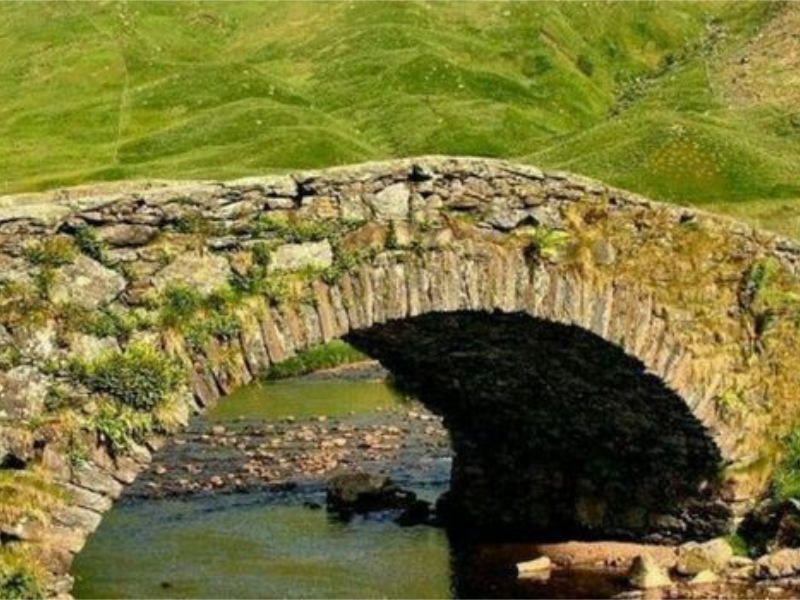
- Stone — For fixed bridges over small rivers and ravines
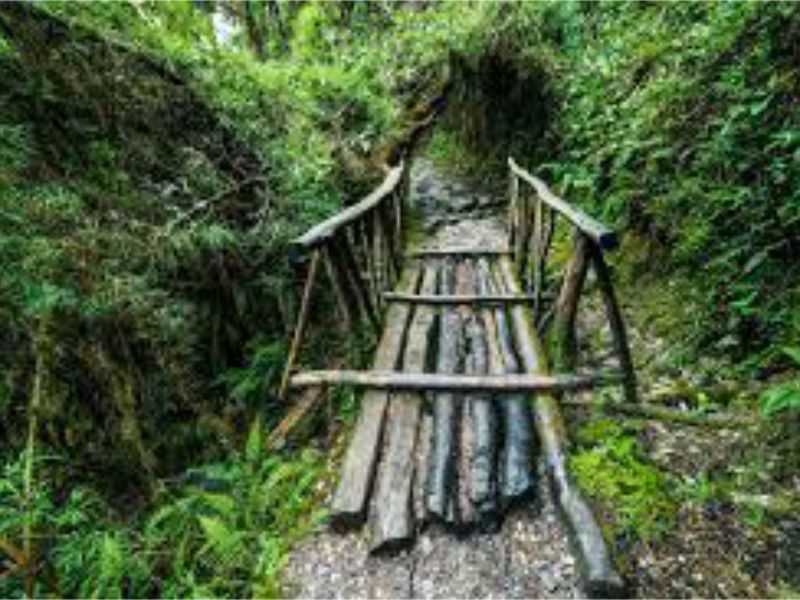
- Wood — Tree trunks for bridges in forested areas
- Plant fibers — Ichu grass, maguey, and other vegetation for suspension bridges
- Totora — For floating bridges on lakes and lagoons
Purpose of Inca bridges
Bridges were not simple crossings; they served vital strategic functions:
- Connecting ecological zones — From coast (0 masl) to mountains (4,500+ masl), enabling product exchange between different climates
- Continuous flow of goods — Chasquis (messengers) used these bridges to transport messages at great speed throughout the empire
- Territorial control — Bridges were military checkpoints. The Inca could order a bridge's destruction to prevent enemy advance
- Community organization — Construction and maintenance was performed through mita (obligatory communal labor)
Inca bridge at Machu Picchu
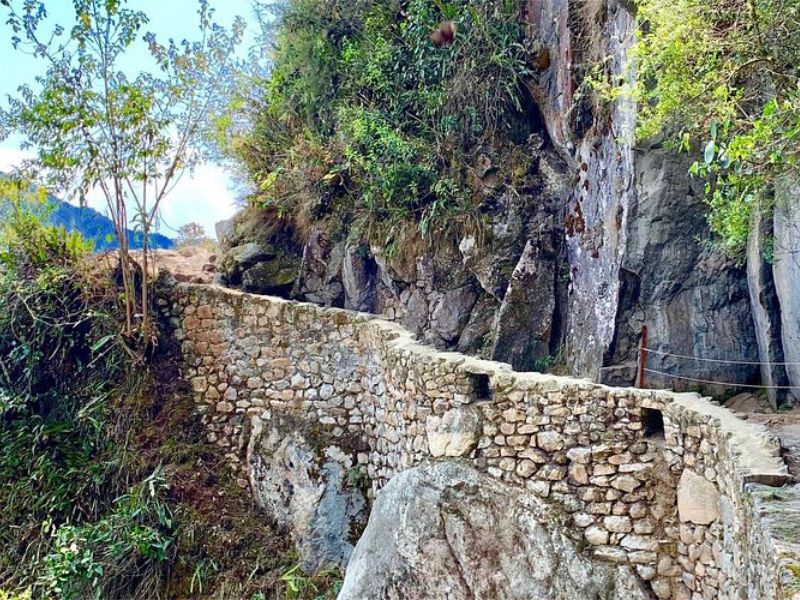
Machu Picchu's Historic Sanctuary houses an impressive bridge carved directly into rock, positioned at the edge of a cliff over 600 meters above the Urubamba River.
This bridge was part of the citadel's defense system. It consisted of wooden logs placed across a gap carved in the rock. By removing the logs, the passage was blocked, protecting Machu Picchu from invaders.
Hanging Inca bridges: the art of ichu
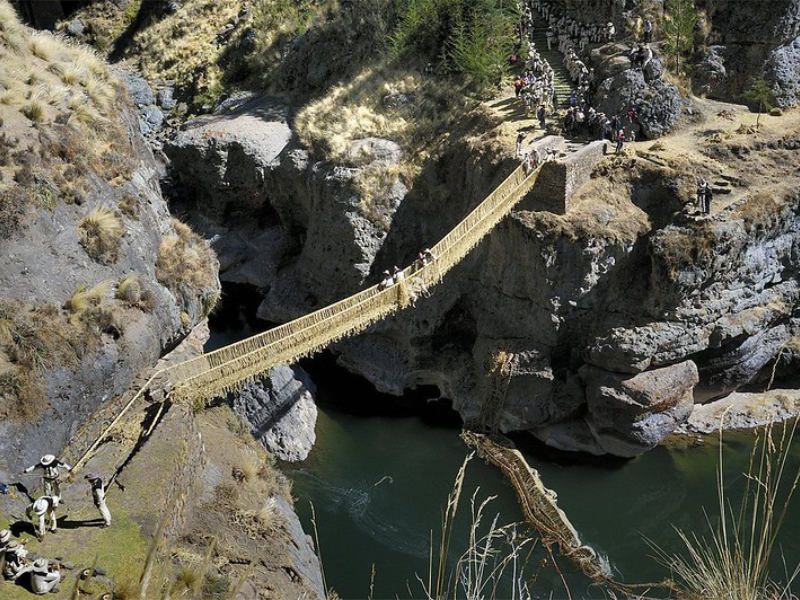
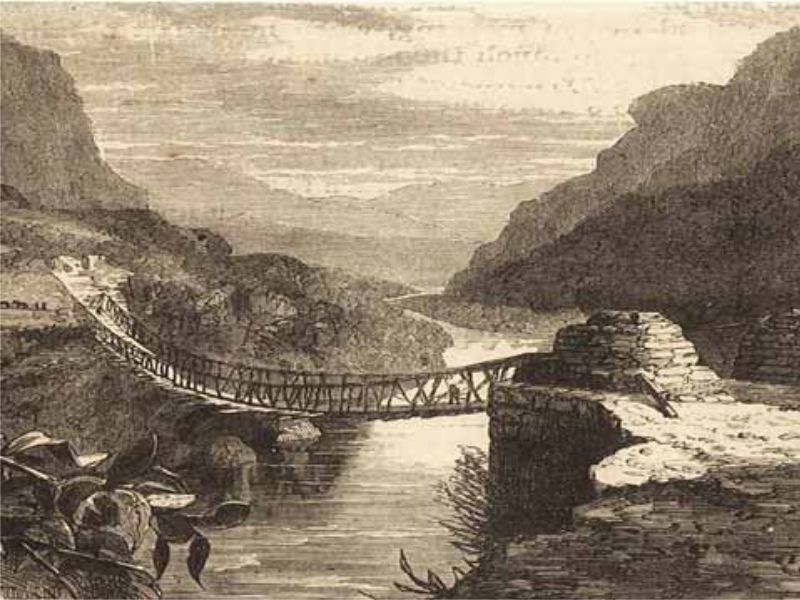
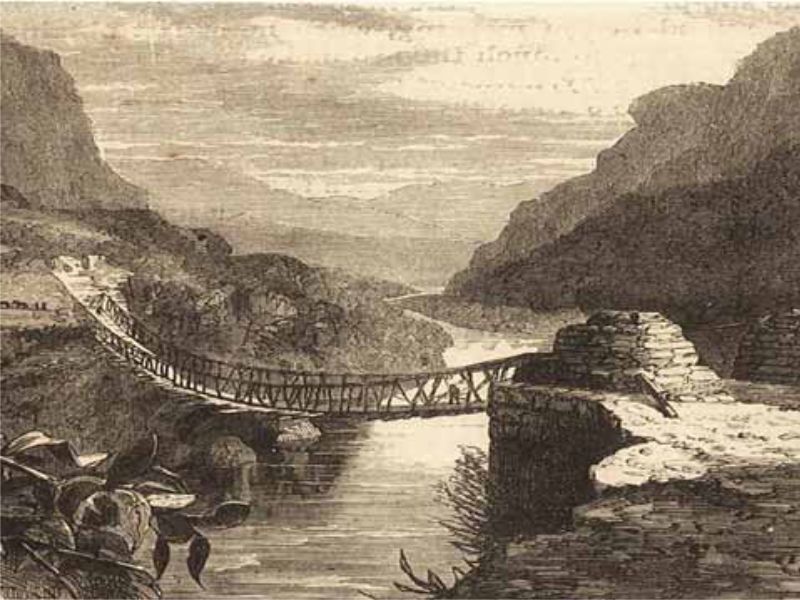
Ichu fiber suspension bridges are the masterpiece of Inca engineering, spanning up to 50 meters across deep canyons and rivers.
Q'eswachaka: the last active Inca hanging bridge
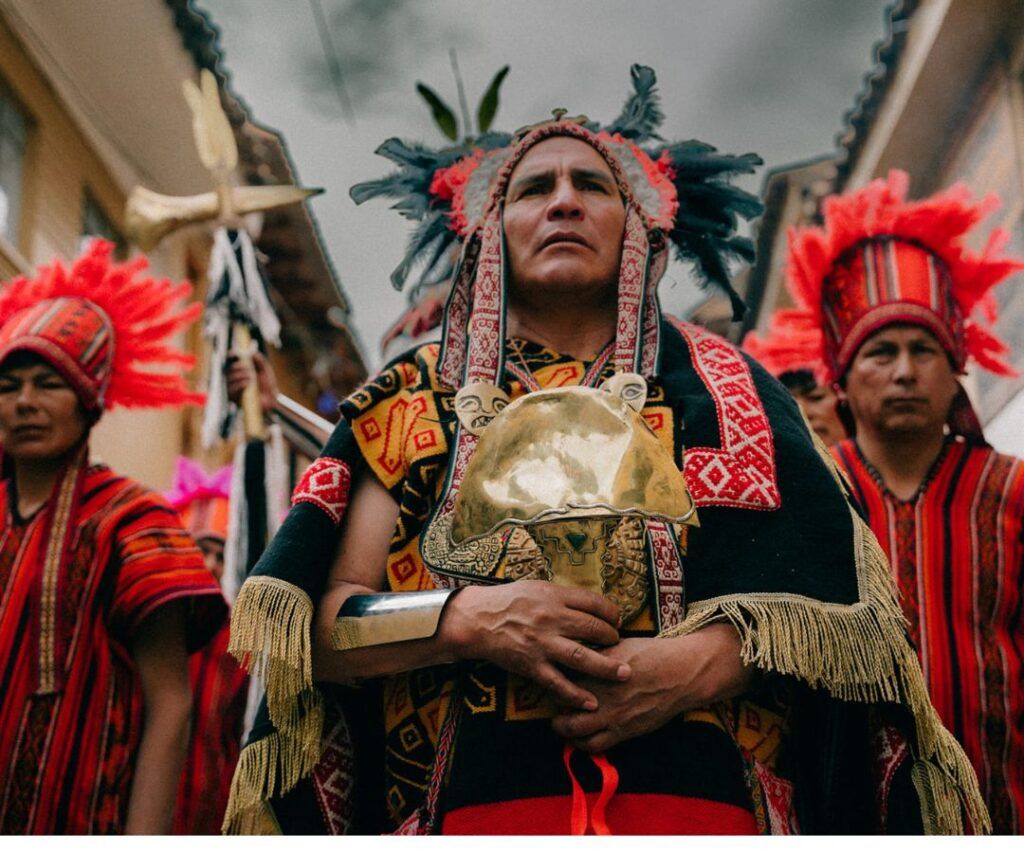
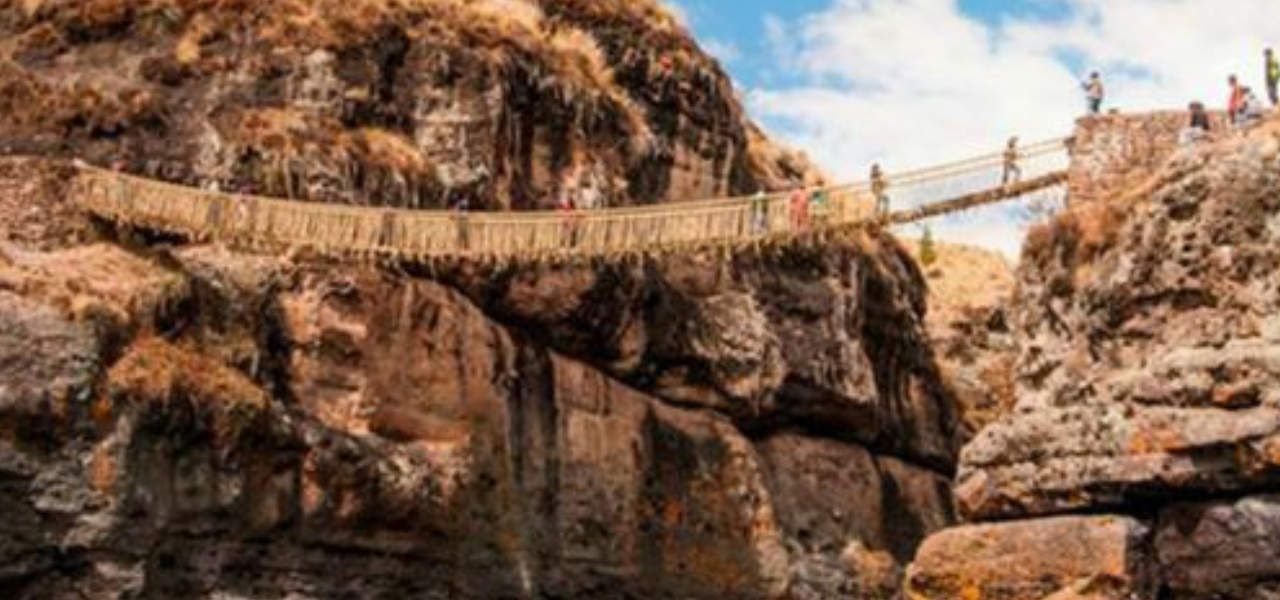
The Q'eswachaka is currently the world's last active Inca hanging bridge. Located over the Apurimac River, about 4 hours from Cusco, it is renewed every year in June by local Quechua communities in a 3-day ancestral ceremony.
This ritual was declared Intangible Cultural Heritage of Humanity by UNESCO in 2013. At Ready to Travel Peru we offer the Q'eswachaka Bridge Tour as a 1-day trip from Cusco.
Floating bridges of Lake Titicaca
On Lake Titicaca (3,812 masl), the world's highest navigable lake, the Incas built floating bridges using totora, an aquatic plant. The Uros communities maintain this tradition today, living on artificial totora islands.
Walk the Inca paths today
At Ready to Travel Peru we offer:
- Inca Trail 4 days — The classic route to Machu Picchu along the Qhapaq Ñan
- Inca Trail 2 days — Short version for those with less time
- Q'eswachaka Bridge Tour — Visit the last active Inca hanging bridge
Inca roads and bridges are not just engineering works; they are the backbone of a civilization that connected peoples, cultures, and ecosystems across one of the most challenging territories on the planet.